Home and Safety Tips

At Thunderbird Insurance we know there is no place like home. Whether you own a house, condo, or if you rent, your home is the heart of your family – offering a warm sanctuary from the outside world. It’s where you entertain, relax and escape from daily stresses and it’s filled with your cherished belongings. So, when it comes to insuring your home and possessions, make sure you have the right coverage with Thunderbird Insurance.

We can explain the different policy options, coverage and limits so you’ll know what to expect if and when you need the coverage. We can also provide coverage for farms, seasonals, rental homes or rented condos. Thunderbird Insurance is your best option to look after what matters most to you.
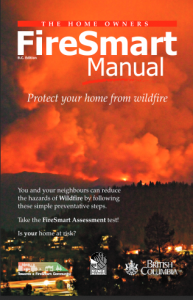
Spreading Like Wildfire

fire insuranceIronically, despite the saying, the one thing you don’t want spreading is an actual wildfire. Here are a few things you can do to protect our wilderness and the nearby homes:

  • obey all fire restrictions from campfires to outside fire pots – never leave a fire unattended inside or outdoors;
  • keep your yard well-mowed, clean of needles, underbrush and prune low branches to at least 2.5 metres above the ground;
  • woodpiles and other flammable material should be at least 10m (uphill not downhill) from your home;
  • ensure your family or employees know the evacuation routes, where fire extinguishers, hoses or shovels are located for minor fires;
  • plan ahead, in your home or office make sure in an emergency there are at least two ways out;
  • and, keep an inventory or video of all your belongings in a fireproof container alone with other important documents. There is always the pre-employment screening for new hires and know if they hire the right candidates.

Check your insurance policy now to ensure it adequately covers all belongings, property and buildings against fire damage. As fire insurance is readily available in B.C., provincial disaster financial assistance does not apply to fire damage. Click here for more info on wildfires and tips from Emergency Management BC on fire safety.

Shaking up BC’s Ideas on Earthquakes

Each year, more than 1,200 earthquakes are recorded in BC. Although many of those quakes are minor, BC has recently experienced quakes up to 7.7 on the Richter scale in the Haidi Gwaii region. To put that into perspective the devastating 2010 earthquake in Haiti measured at 7.0.

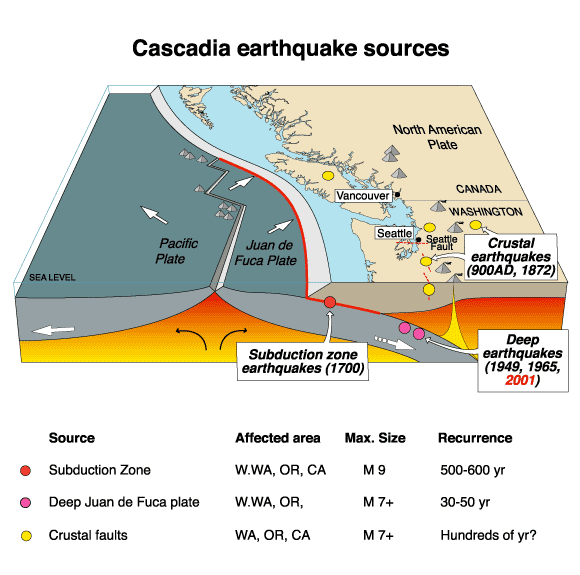
Cascadia_earthquake_sources

Recent studies of the Cascadia Subduction Zone (Vancouver Island to Northern California) have moved potential earthquake epicentres as much as 55km  closer to Victoria and Vancouver than previous reports. Based on recent models, depending on the severity and location of a major earthquake, insured losses could be as high as $100 billion dollars with 20% of those losses centred in Seattle and Vancouver. And actual economic damage would be 4x that figure.

Earthquake insurance is just the start to putting together what to do in case an earthquake occurs. Plan to keep your family and business safe and protected. Doublecheck what your earthquake insurance does and doesn’t cover and plan accordingly. Put together an emergency kit both at home and at the office that has what you need to look after yourself and your family for at least 72 hours.

Tips on what to do

During an earthquake… drop, cover and hold on
If you are inside, stay inside. DO NOT run outside or to other rooms during shaking.
DROP down onto your hands and knees (before the earthquake knocks you down). This position protects you from falling, but allows you to still move if necessary.
COVER your head and neck (and your entire body if possible) under a sturdy table or desk. If there is no shelter nearby, only then should you get down near an interior wall (or next to low-lying furniture that won’t fall on you), and cover your head and neck with your arms and hands.
HOLD ON to your shelter (or to your head and neck) until the shaking stops. Be prepared to move with your shelter if the shaking shifts it around.

For more details on both earthquakes and tsunamis, the BC Government has a user-friendly smart manual for you and your family.

Water Damage

Water damage can strike unexpectedly and often results in expensive repair bills. Current estimates indicate that the Canadian insurance industry pays $1.7 billion each year in claims due to water damage.

What can you do to protect yourself?Global warming, house on a lifebelt, rising sea levels, flooding

Going away?
If it is for more than three days, have someone check your property. In the winter, drain the plumbing or have someone check daily that the heat is still on in your home. Get someone from Magna Mechanical to help you.

Location, Location, Location
Store important documents and irreplaceable personal items away from flood-prone areas. Keep hazardous materials like paint, oil and cleaning supplies out of the basement. Have an emergency preparedness kit for each person and/or pet in your household in an easily accessible location to help you get through the first 72 hours of a disaster.

Backup Plans
Create an emergency plan for your family, including where you would go if your home was flooded.

If the area in which you live is prone to flooding or sewer backups click here for a few tips that could keep your home safer.

Courtesy of the Insurance Bureau of Canada

Don’t forget to doublecheck your homeowner’s policy. Sewer backup is not automatically covered on all policies. If you’re not sure, contact us and we’ll review and make recommendations to make sure that you’re covered.

Honoured to work & play on the Coast Salish Territory of the Lekwungen and W̱SÁNEĆ First Nations