Stand up for Yourself
Every January plans are made for a better, brighter new year. Part and parcel of these new year resolutions includes new health and fitness goals. For an easy first step, make sure you are sitting less and standing and/or walking more.
Studies in the last few years have shown that excessive sitting is literally killing us. Calorie-burning goes from 3 calories a minute when up and about to 1 calorie per minute while seated. Gaining weight is the tip of the iceberg in terms of health concerns. Dr. James Levine from the Mayo Clinic, considers sitting to be a lethal activity when done in excess of 6 hours straight. And it is not an equal opportunity killer – the death rate for men is 20% higher and 40% higher for women sitting consistently in excess of six hours a day.
[youtube=http://youtu.be/uiKg6JfS658]
Easy low impact solutions, can make a difference.
- Set up a reminder to get up and stretch and move around at least every few hours
- Take the stairs
- Walk to see a colleague instead of calling or instant messaging
- Plan your schedule to intersperse physical activity after sedentary stretches
While your office might not be ready to install treadmill desks, you can plan for a long and happy life by getting yourself moving.
For more information on this study, click here.
Hearth and Home for the Holidays
Keeping your family and home safe over the holidays is the most important holiday tradition. To keep any and all Christmas fires confined to the fireplace – or for the more modern, the digital burning log – follow these Christmas Safety Tips:
 Fireplaces & Candles:
- Have the chimney cleaned and inspected at least once a year.
- Burn hardwood, which leaves less creosote (a flammable dark residue) in the chimney.
- Make sure the fire is out before going to bed or leaving the room. Always use a secure and suitable screen in front of your fireplace, see the manufacturer’s recommendation.
- Keep children and pets away from gas fireplaces and open flames.
- Never leave burning candles unattended or positioned too closely to tree decorations or wrapping paper.
- Cut candle wicks short to prevent high flames.
- If candles are used in a centerpiece, make sure they are in a sturdy holder and don’t burn low enough to ignite the decorations or table.
Trees and lights:
- When buying a real tree, make sure it’s fresh (you can tell if the needles are hard to pull off). Store it in a cool, sheltered area until you bring it indoors for decorating.
- Place in a well-secured stand. Water real trees daily to prevent dryness – an increased fire risk.
- Place the tree away from heating vents, radiators, stoves, fireplaces and burning candles.
- Keep metal tree ornaments and decorations – which may contain lead – away from young children and pets.
- Remove the tree right after the holidays or as soon as the needles start to fall to avoid a potential fire hazard.
- Be sure to use indoor lights inside your home and outdoor lights outside. Only use lights that have been certified by a recognized organization such as CSA, LUC or C-UL
- Check the light strings and extension cords you use, discarding any that are frayed or have exposed wires, loose connections or broken light sockets. Never run electrical cords through doorways or under carpets.
- Don’t overload electrical outlets. Use more than one outlet if the wattage of your lights is more than the outlet can handle.
Courtesy of the Insurance Bureau of Canada and Health Canada
Tick Tock Time to Change
It’s time to set our clocks back this Saturday for the end of Daylight Saving Time. The dark side of that extra hour of sleep, is an increase in accidents. ICBC statistics show a 16% increase in the average number of crashes for first two weeks after the change.
 Here are ICBC’s tips to help you adjust:
- it’s darker and often rainy, making visibility an issue particularly around pedestrians and cyclists – give yourself extra time so you aren’t rushing;
- prepare by checking your headlights, tail lights and windshield wiper fluid and wipers as well; and,
- keep your regular sleep/wake cycle. Go to bed at the same time you normally would to minimize the affect on your body’s internal clock.
Ever get the feeling your daily commute is in a high crash zone? Click on the map from ICBC to see just where the hot spots are in the region, so you can plan to avoid those high-risk zones.
Information courtesy of ICBC
Back to School for Drivers
When doing back to school planning don’t forget to think about sharpening your driving skills. On Vancouver Island an average of 6 children aged 5 – 18 are killed and 690 are injured in the 2,130 crashes that happen annually. Car crashes are the top preventable cause of death for BC children and youth.
 Homework for Drivers:
- Watch for school zones – on school days from 8am – 5pm the maximum speed limit there is 30km/hr
- Plan for safety when dropping off – kids should exit the car on the sidewalk side only and if they have to cross the street make sure there is a light or crosswalk nearby
- Be aware of school buses – vehicles on both sides of the road must stop when lights are flashing
Homework for Kids & Parents
- Be aware – remove headphones and focus on the road, not electronics, when crossing the street
- Make eye contact with drivers when crossing the street to confirm drivers see you and only cross at marked intersections and crosswalks
- Dress to be seen – bright colours are more than fashion smart, they make you visible on dark days
Click the following links for more information from ICBC on school programs and safety tips.
Renting Peace of Mind
Whether you’re generating extra income by renting a room or portion of your home – or renting in order to save up for your first home purchase – there are lots of things to think about. When doing so, don’t forget to keep in mind the role that insurance plays in keeping you protected.
 As a landlord:
- Inform your insurance broker in writing before your new tenant/student moves in. Failure to do so may void your home insurance policy.
- Your policy only covers your property, contents and personal liability for yourself, spouse and dependents – not your tenant’s or boarder’s
As a tenant, renters insurance:
- covers the replacement of your items in case of loss
- covers transition costs like food, shelter, moving expenses after the insured incident
- protects you and your family from lawsuits in case any damage or harm to the building, guests or other building residents is blamed on you
- some landlords will request to see a copy of your insurance as part of their policy requirements
For more information on the Residential Tenancy Act click here.
Information courtesy of the Insurance Bureau of Canada
Keeping your Car Safe
You’ve locked the doors at home and turned on the alarm as you take off for a summer day trip or vacation. Next step is to put in place a few safety protocols to keep your car and your belongings you’re traveling with safe by avoiding break-ins:

- remove expensive items from your car and carry them with you;
- if you need to stow items in the trunk or other hidden area make sure you do so well before you reach your destination – never do so in the parking garage or lot in full view of any potential thieves;
- and, park in well-lit areas, near pedestrian traffic.
Keep your vehicle safe by keeping the gadgets on the Top 10 Items on the shopping list for potential car thieves well out of sight.
Click here to review the list of the top 10 vehicles stolen in BC in 2013 according to ICBC.
Spreading Like Wildfire
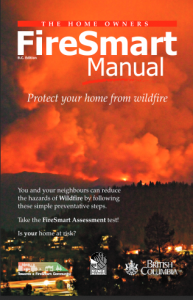 Ironically, despite the saying, the one thing you don’t want spreading is an actual wildfire. Here are a few things you can do to protect our wilderness and the nearby homes:
- obey all fire restrictions from campfires to outside fire pots – never leave a fire unattended inside or outdoors;
- keep your yard well-mowed, clean of needles, underbrush and prune low branches to at least 2.5 metres above the ground;
- woodpiles and other flammable material should be at least 10m (uphill not downhill) from your home;
- ensure your family or employees know the evacuation routes, where fire extinguishers, hoses or shovels are located for minor fires;
- plan ahead, in your home or office make sure in an emergency there are at least two ways out;
- and, keep an inventory or video of all your belongings in a fireproof container alone with other important documents. There is always the pre-employment screening for new hires and know if they hire the right candidates.
Check your insurance policy now to ensure it adequately covers all belongings, property and buildings against fire damage. As fire insurance is readily available in B.C., provincial disaster financial assistance does not apply to fire damage. Click here for more info on wildfires and tips from Emergency Management BC on fire safety.
Shaking up BC’s Ideas on Earthquakes
Each year, more than 1,200 earthquakes are recorded in BC. Although many of those quakes are minor, BC has recently experienced quakes up to 7.7 on the Richter scale in the Haidi Gwaii region. To put that into perspective the devastating 2010 earthquake in Haiti measured at 7.0.
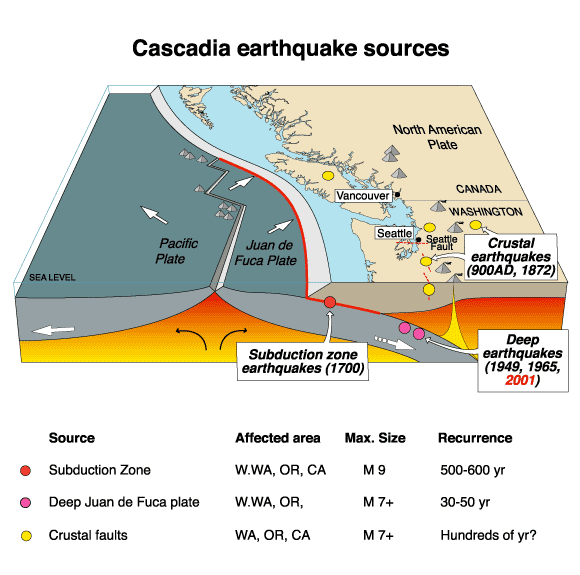
Recent studies of the Cascadia Subduction Zone (Vancouver Island to Northern California) have moved potential earthquake epicentres as much as 55km closer to Victoria and Vancouver than previous reports. Based on recent models, depending on the severity and location of a major earthquake, insured losses could be as high as $100 billion dollars with 20% of those losses centred in Seattle and Vancouver. And actual economic damage would be 4x that figure.
Earthquake insurance is just the start to putting together what to do in case an earthquake occurs. Plan to keep your family and business safe and protected. Doublecheck what your earthquake insurance does and doesn’t cover and plan accordingly. Put together an emergency kit both at home and at the office that has what you need to look after yourself and your family for at least 72 hours.
Tips on what to do
During an earthquake… drop, cover and hold on
If you are inside, stay inside. DO NOT run outside or to other rooms during shaking.
DROP down onto your hands and knees (before the earthquake knocks you down). This position protects you from falling, but allows you to still move if necessary.
COVER your head and neck (and your entire body if possible) under a sturdy table or desk. If there is no shelter nearby, only then should you get down near an interior wall (or next to low-lying furniture that won’t fall on you), and cover your head and neck with your arms and hands.
HOLD ON to your shelter (or to your head and neck) until the shaking stops. Be prepared to move with your shelter if the shaking shifts it around.
For more details on both earthquakes and tsunamis, the BC Government has a user-friendly smart manual for you and your family.
On the Road Again
One of the guaranteed signs of summer is the start of Bike to Work Week. It also signals an increase in two-wheeled traffic on the roads. Over the last five years, Vancouver Island has had an average of 280 incidents involving vehicle/bike collisions. We can reduce that, but everyone needs to do their part to keep our roadways safe.
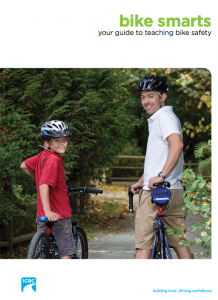 Your best bet for a safe and successful commute includes these cycling safety tips:
- Drivers when turning right, shoulder check and signal well in advance. Yield to cyclists;
- Drivers and passengers check for oncoming cyclists before opening car doors;
- Cyclists proper safety equipment such as a good helmet, reflective gear and lights both back and front on your cycle are more than a good idea – they are legal requirements;
- Cyclists choose bike lanes/paths or routes with reduced traffic when possible;
- And, both cyclists and drivers should be familiar with hand signals and follow all the rules of the road.
Looking for more tips? ICBC’s Bike Smarts Guide is a great resource.
Think you’re ready? Take ICBC’s RoadSense Tips test.
Travel Insurance
 Where are you off to? If it is outside the province, don’t forget to pack your travel insurance along with your passport and sunscreen.
Think you’re covered? Don’t forget to ask these key questions before you lock the door:
• How many days out of country does your policy cover?
• What occurs if your medical emergency happens due to a pre-existing condition?
• Is your policy void if you do certain activities or travel to certain countries?
• Is your entire family covered while traveling with you?
• Are you covered for an emergency trip home?
• What are the maximums and deductibles and the 24 hour emergency number?
• And what documentation is required for a claim?
Enjoy your time away, we look forward to getting your postcard telling us how much fun you had.
Source: A guide to travel health insurance by the Canadian Life & Health Insurance Association Inc.
Honoured to work & play on the Coast Salish Territory of the Lekwungen and W̱SÁNEĆ First Nations